


Visiting professors spring 2026
Open lectures by distinguished international artists and art experts invited by the Academy of Fine Arts. See lectures for spring 2026.
In the Visiting professor programme, distinguished international artists and art experts are invited to teach and share their knowledge at the Academy of Fine Arts for a fixed period. The visit also includes a lecture that is open for the audience. The lectures are organised on Wednesdays at the academy’s Myllytori, unless stated otherwise.
1.1.2026: Nontobeko Ntombela: A biomythographical maybe? Exploring the life and work of Valerie Desmore
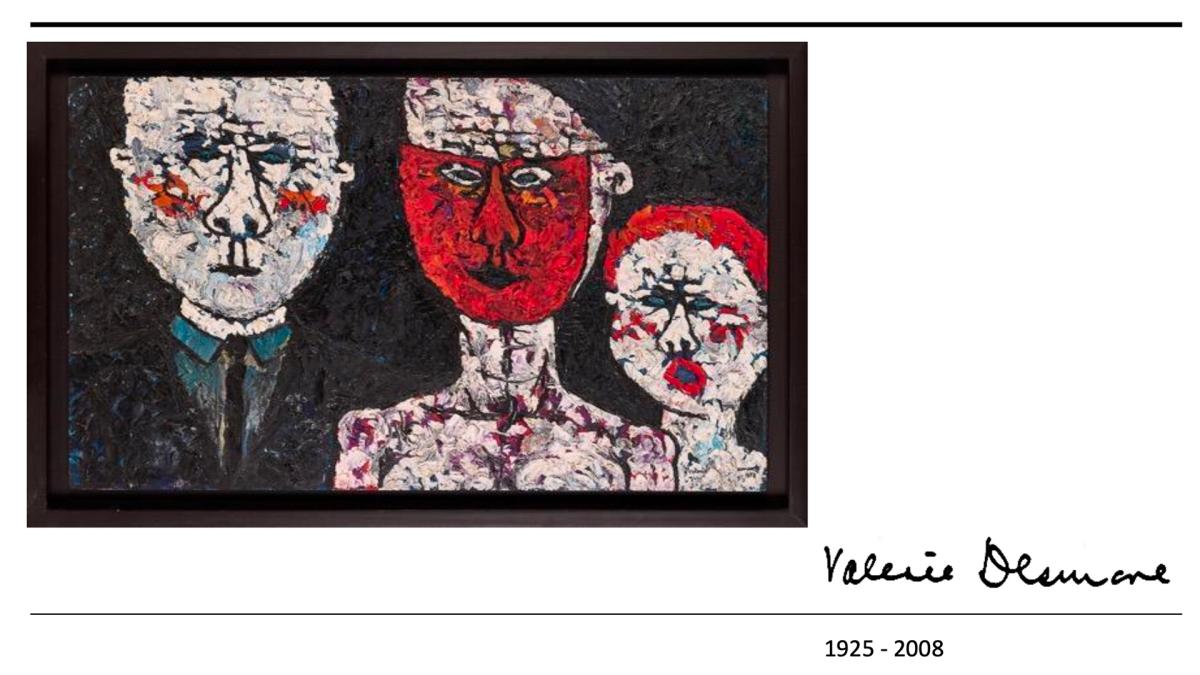
Curator and lecturer Nontobeko Ntombela reflects on theories that help us expand our understanding of the work of Valerie Desmore.
Once celebrated as “Cape Town’s child prodigy, wunderkind, and teenage artist,” Valerie lived in exile in London until her death in 2008. Valerie left Cape Town in 1946 to study at the Slade School of Art in London and to escape South Africa’s racial persecution. Influenced by early South African Impressionism, Post-Impressionism, and German Expressionism, her time at the Slade was short, as she found the curriculum too restrictive, and soon studied under the Viennese Expressionist Oskar Kokoschka for several years. It was at this juncture that she decided to change career and become a fashion designer and worked at Marks and Spencer for 20 years. At the age of 60, she retired from fashion to dedicate her life back to art, a pursuit she continued until her death.
About Nontobeko Ntombela
Ntombela began her career as a curator in 2002 and has worked at various institutions, including the Art for Humanity (2000-2002), BAT Centre (2002-2005), Durban University Art Gallery (2005-2010), and the Johannesburg Art Gallery (2010-2012), where she curated numerous exhibitions. In 2012, Ntombela took up an academic position at Wits, developing the curatorial program, which was launched in 2019. Since joining Wits, her curatorial practice has shifted more toward centring archival and research-driven historical curatorial projects. Some of her most notable curatorial projects include: “Then I Knew I Was Good at Painting: Esther Mahlangu, A Retrospective (2024-2025) at Iziko National Gallery and Wits Art Museum, ”When Rain Clouds Gather: South African Black Women Artists 1940–2000” (2022-2023) at the Norval Foundation in Cape Town, The Burden of Memory (2019) a multiple cite event in the city of Yaoundé Cameroon; From No Fixed Place (ten Solo projects) at Cape Town Art Fair (2018). She is the 2025 winner of the National Arts and Culture Awards for Outstanding Curator.
2.2.2026: Slavs and Tatars – Transliterative Tease
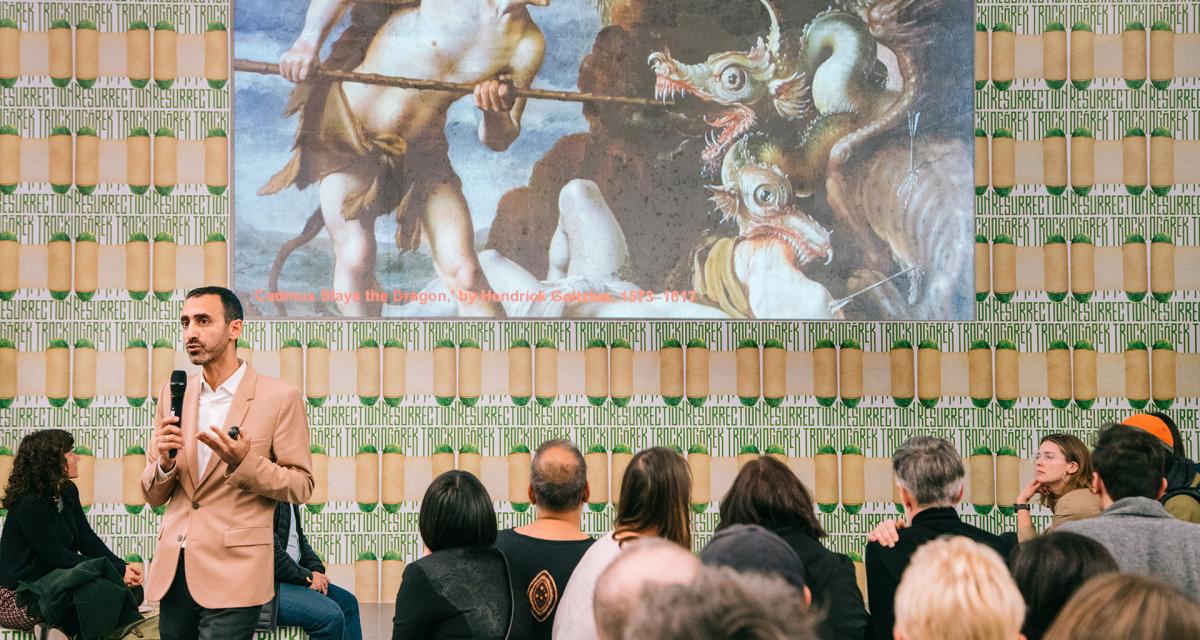
The artist collective focuses on the Turkic languages of the former Soviet Union, as well as the eastern and western frontiers of the Turkic sphere, namely Anatolia and Xinjiang/Uighuristan.
Through the lens of phonetic, semantic, and theological slippage, Transliterative Tease explores the potential for transliteration – the conversion of scripts – as a strategy equally of resistance and research into notions such as identity politics, colonialism, and faith. The lecture-performance focuses on the Turkic languages of the former Soviet Union, as well as the eastern and western frontiers of the Turkic sphere, namely Anatolia and Xinjiang/Uighuristan.
About Slavs and Tatars
Slavs and Tatars is an internationally renowned art collective devoted to an area East of the former Berlin Wall and West of the Great Wall of China known as Eurasia. Since its inception in 2006, the collective has shown a keen grasp of polemical issues in society, clearing new paths for contemporary discourse via a wholly idiosyncratic form of knowledge production: including popular culture, spiritual and esoteric traditions, oral histories, modern myths, as well as scholarly research. Their work has been the subject of solo exhibitions at institution across the globe, including the Vienna Secession; MoMA, New York; Salt, Istanbul; Albertinum Dresden, amongst others. The collective’s practice is based on three activities: exhibitions, publications, and lecture-performances. The collective has published more than twelve books to date, including most recently their first children’s book, Azbuka Strikes Back with Walther und Franz König. In 2020, Slavs and Tatars opened Pickle Bar, a slavic aperitivo bar-cum-project space a few doors down from their studio in the Moabit district of Berlin as well as a residency and mentorship program for young professionals from the region.
More information: https://slavsandtatars.com.
3.3.2026: Nontobeko Ntombela: A biomythographical maybe? Exploring the life and work of Valerie Desmore
Curator and lecturer Nontobeko Ntombela reflects on theories that help us expand our understanding of the work of Valerie Desmore.
Once celebrated as “Cape Town’s child prodigy, wunderkind, and teenage artist,” Valerie lived in exile in London until her death in 2008. Valerie left Cape Town in 1946 to study at the Slade School of Art in London and to escape South Africa’s racial persecution. Influenced by early South African Impressionism, Post-Impressionism, and German Expressionism, her time at the Slade was short, as she found the curriculum too restrictive, and soon studied under the Viennese Expressionist Oskar Kokoschka for several years. It was at this juncture that she decided to change career and become a fashion designer and worked at Marks and Spencer for 20 years. At the age of 60, she retired from fashion to dedicate her life back to art, a pursuit she continued until her death.
About Nontobeko Ntombela
Ntombela began her career as a curator in 2002 and has worked at various institutions, including the Art for Humanity (2000-2002), BAT Centre (2002-2005), Durban University Art Gallery (2005-2010), and the Johannesburg Art Gallery (2010-2012), where she curated numerous exhibitions. In 2012, Ntombela took up an academic position at Wits, developing the curatorial program, which was launched in 2019. Since joining Wits, her curatorial practice has shifted more toward centring archival and research-driven historical curatorial projects. Some of her most notable curatorial projects include: “Then I Knew I Was Good at Painting: Esther Mahlangu, A Retrospective (2024-2025) at Iziko National Gallery and Wits Art Museum, ”When Rain Clouds Gather: South African Black Women Artists 1940–2000” (2022-2023) at the Norval Foundation in Cape Town, The Burden of Memory (2019) a multiple cite event in the city of Yaoundé Cameroon; From No Fixed Place (ten Solo projects) at Cape Town Art Fair (2018). She is the 2025 winner of the National Arts and Culture Awards for Outstanding Curator.
4.4.2026: Slavs and Tatars – Transliterative Tease
The artist collective focuses on the Turkic languages of the former Soviet Union, as well as the eastern and western frontiers of the Turkic sphere, namely Anatolia and Xinjiang/Uighuristan.
Through the lens of phonetic, semantic, and theological slippage, Transliterative Tease explores the potential for transliteration – the conversion of scripts – as a strategy equally of resistance and research into notions such as identity politics, colonialism, and faith. The lecture-performance focuses on the Turkic languages of the former Soviet Union, as well as the eastern and western frontiers of the Turkic sphere, namely Anatolia and Xinjiang/Uighuristan.
About Slavs and Tatars
Slavs and Tatars is an internationally renowned art collective devoted to an area East of the former Berlin Wall and West of the Great Wall of China known as Eurasia. Since its inception in 2006, the collective has shown a keen grasp of polemical issues in society, clearing new paths for contemporary discourse via a wholly idiosyncratic form of knowledge production: including popular culture, spiritual and esoteric traditions, oral histories, modern myths, as well as scholarly research. Their work has been the subject of solo exhibitions at institution across the globe, including the Vienna Secession; MoMA, New York; Salt, Istanbul; Albertinum Dresden, amongst others. The collective’s practice is based on three activities: exhibitions, publications, and lecture-performances. The collective has published more than twelve books to date, including most recently their first children’s book, Azbuka Strikes Back with Walther und Franz König. In 2020, Slavs and Tatars opened Pickle Bar, a slavic aperitivo bar-cum-project space a few doors down from their studio in the Moabit district of Berlin as well as a residency and mentorship program for young professionals from the region.
More information: https://slavsandtatars.com.
In the Visiting professor programme, distinguished international artists and art experts are invited to teach and share their knowledge at the Academy of Fine Arts for a fixed period. The visit also includes a lecture that is open for the audience. The lectures are organised on Wednesdays at the academy’s Myllytori, unless stated otherwise.
1.1.2026: Nontobeko Ntombela: A biomythographical maybe? Exploring the life and work of Valerie Desmore
Curator and lecturer Nontobeko Ntombela reflects on theories that help us expand our understanding of the work of Valerie Desmore.
Once celebrated as “Cape Town’s child prodigy, wunderkind, and teenage artist,” Valerie lived in exile in London until her death in 2008. Valerie left Cape Town in 1946 to study at the Slade School of Art in London and to escape South Africa’s racial persecution. Influenced by early South African Impressionism, Post-Impressionism, and German Expressionism, her time at the Slade was short, as she found the curriculum too restrictive, and soon studied under the Viennese Expressionist Oskar Kokoschka for several years. It was at this juncture that she decided to change career and become a fashion designer and worked at Marks and Spencer for 20 years. At the age of 60, she retired from fashion to dedicate her life back to art, a pursuit she continued until her death.
About Nontobeko Ntombela
Ntombela began her career as a curator in 2002 and has worked at various institutions, including the Art for Humanity (2000-2002), BAT Centre (2002-2005), Durban University Art Gallery (2005-2010), and the Johannesburg Art Gallery (2010-2012), where she curated numerous exhibitions. In 2012, Ntombela took up an academic position at Wits, developing the curatorial program, which was launched in 2019. Since joining Wits, her curatorial practice has shifted more toward centring archival and research-driven historical curatorial projects. Some of her most notable curatorial projects include: “Then I Knew I Was Good at Painting: Esther Mahlangu, A Retrospective (2024-2025) at Iziko National Gallery and Wits Art Museum, ”When Rain Clouds Gather: South African Black Women Artists 1940–2000” (2022-2023) at the Norval Foundation in Cape Town, The Burden of Memory (2019) a multiple cite event in the city of Yaoundé Cameroon; From No Fixed Place (ten Solo projects) at Cape Town Art Fair (2018). She is the 2025 winner of the National Arts and Culture Awards for Outstanding Curator.
2.2.2026: Slavs and Tatars – Transliterative Tease
The artist collective focuses on the Turkic languages of the former Soviet Union, as well as the eastern and western frontiers of the Turkic sphere, namely Anatolia and Xinjiang/Uighuristan.
Through the lens of phonetic, semantic, and theological slippage, Transliterative Tease explores the potential for transliteration – the conversion of scripts – as a strategy equally of resistance and research into notions such as identity politics, colonialism, and faith. The lecture-performance focuses on the Turkic languages of the former Soviet Union, as well as the eastern and western frontiers of the Turkic sphere, namely Anatolia and Xinjiang/Uighuristan.
About Slavs and Tatars
Slavs and Tatars is an internationally renowned art collective devoted to an area East of the former Berlin Wall and West of the Great Wall of China known as Eurasia. Since its inception in 2006, the collective has shown a keen grasp of polemical issues in society, clearing new paths for contemporary discourse via a wholly idiosyncratic form of knowledge production: including popular culture, spiritual and esoteric traditions, oral histories, modern myths, as well as scholarly research. Their work has been the subject of solo exhibitions at institution across the globe, including the Vienna Secession; MoMA, New York; Salt, Istanbul; Albertinum Dresden, amongst others. The collective’s practice is based on three activities: exhibitions, publications, and lecture-performances. The collective has published more than twelve books to date, including most recently their first children’s book, Azbuka Strikes Back with Walther und Franz König. In 2020, Slavs and Tatars opened Pickle Bar, a slavic aperitivo bar-cum-project space a few doors down from their studio in the Moabit district of Berlin as well as a residency and mentorship program for young professionals from the region.
More information: https://slavsandtatars.com.
3.3.2026: Nontobeko Ntombela: A biomythographical maybe? Exploring the life and work of Valerie Desmore
Curator and lecturer Nontobeko Ntombela reflects on theories that help us expand our understanding of the work of Valerie Desmore.
Once celebrated as “Cape Town’s child prodigy, wunderkind, and teenage artist,” Valerie lived in exile in London until her death in 2008. Valerie left Cape Town in 1946 to study at the Slade School of Art in London and to escape South Africa’s racial persecution. Influenced by early South African Impressionism, Post-Impressionism, and German Expressionism, her time at the Slade was short, as she found the curriculum too restrictive, and soon studied under the Viennese Expressionist Oskar Kokoschka for several years. It was at this juncture that she decided to change career and become a fashion designer and worked at Marks and Spencer for 20 years. At the age of 60, she retired from fashion to dedicate her life back to art, a pursuit she continued until her death.
About Nontobeko Ntombela
Ntombela began her career as a curator in 2002 and has worked at various institutions, including the Art for Humanity (2000-2002), BAT Centre (2002-2005), Durban University Art Gallery (2005-2010), and the Johannesburg Art Gallery (2010-2012), where she curated numerous exhibitions. In 2012, Ntombela took up an academic position at Wits, developing the curatorial program, which was launched in 2019. Since joining Wits, her curatorial practice has shifted more toward centring archival and research-driven historical curatorial projects. Some of her most notable curatorial projects include: “Then I Knew I Was Good at Painting: Esther Mahlangu, A Retrospective (2024-2025) at Iziko National Gallery and Wits Art Museum, ”When Rain Clouds Gather: South African Black Women Artists 1940–2000” (2022-2023) at the Norval Foundation in Cape Town, The Burden of Memory (2019) a multiple cite event in the city of Yaoundé Cameroon; From No Fixed Place (ten Solo projects) at Cape Town Art Fair (2018). She is the 2025 winner of the National Arts and Culture Awards for Outstanding Curator.
4.4.2026: Slavs and Tatars – Transliterative Tease
The artist collective focuses on the Turkic languages of the former Soviet Union, as well as the eastern and western frontiers of the Turkic sphere, namely Anatolia and Xinjiang/Uighuristan.
Through the lens of phonetic, semantic, and theological slippage, Transliterative Tease explores the potential for transliteration – the conversion of scripts – as a strategy equally of resistance and research into notions such as identity politics, colonialism, and faith. The lecture-performance focuses on the Turkic languages of the former Soviet Union, as well as the eastern and western frontiers of the Turkic sphere, namely Anatolia and Xinjiang/Uighuristan.
About Slavs and Tatars
Slavs and Tatars is an internationally renowned art collective devoted to an area East of the former Berlin Wall and West of the Great Wall of China known as Eurasia. Since its inception in 2006, the collective has shown a keen grasp of polemical issues in society, clearing new paths for contemporary discourse via a wholly idiosyncratic form of knowledge production: including popular culture, spiritual and esoteric traditions, oral histories, modern myths, as well as scholarly research. Their work has been the subject of solo exhibitions at institution across the globe, including the Vienna Secession; MoMA, New York; Salt, Istanbul; Albertinum Dresden, amongst others. The collective’s practice is based on three activities: exhibitions, publications, and lecture-performances. The collective has published more than twelve books to date, including most recently their first children’s book, Azbuka Strikes Back with Walther und Franz König. In 2020, Slavs and Tatars opened Pickle Bar, a slavic aperitivo bar-cum-project space a few doors down from their studio in the Moabit district of Berlin as well as a residency and mentorship program for young professionals from the region.
More information: https://slavsandtatars.com.